Dual Boiler vs. Heat Exchanger: The Barista’s Guide to Home Extraction

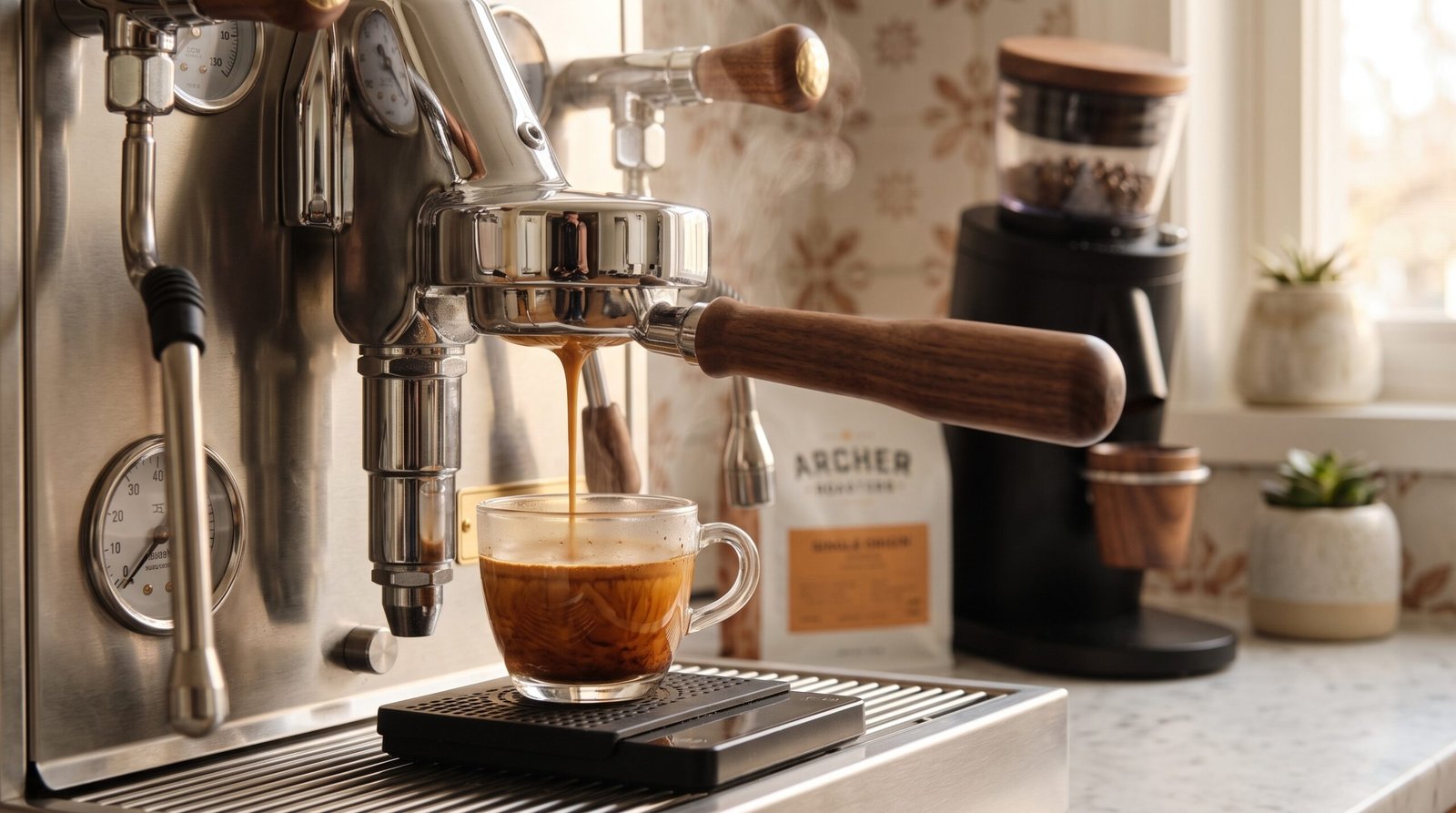
Stepping up from an entry-level appliance to a prosumer espresso machine introduces a critical fork in the road: managing the water temperature for both brewing espresso and steaming milk. Because espresso requires water around 200°F (93°C) and steam requires water well above the boiling point (212°F / 100°C), a machine must somehow handle both without burning the coffee or delivering watery milk.
The two primary architectures that solve this problem are the Heat Exchanger (HX) and the Dual Boiler (DB). Choosing the right one determines your morning workflow, your machine's footprint, and your overall espresso consistency.
The Heat Exchanger (HX): The Efficient Classic
A Heat Exchanger machine uses a single, large boiler that is kept partially filled with water at steaming temperature. Running directly through the middle of this steam boiler is a copper or brass tube (the heat exchanger).
When you pull a shot of espresso, cold water from the reservoir is pumped through this internal tube. As the cold water travels through the super-heated steam boiler, it flash-heats to the correct brewing temperature just before hitting the coffee grounds.
Pros & Cons
Pros: Allows you to brew espresso and steam milk simultaneously. Generally more compact and budget-friendly than dual boiler machines. Highly reliable, commercial-style technology.
Cons: Requires "temperature surfing." Because water sitting idle in the HX tube absorbs too much heat from the surrounding steam boiler, you must perform a "cooling flush" (running a few ounces of water through the group head) before pulling a shot to bring the temperature down.
Trendy HX Pick: Rocket Appartamento
The Rocket Appartamento is the undisputed darling of the home barista world, dominating social media with its iconic circular side-panel cutouts and stunning Italian stainless-steel build.
Why it works: It packs authentic commercial E61 group head technology into a remarkably small footprint, delivering immense steam pressure for perfect latte art microfoam.
The Dual Boiler (DB): Precision and Consistency
A Dual Boiler machine operates exactly as the name implies: it houses two completely separate boilers. One boiler is dedicated solely to heating water for espresso extraction (usually controlled by a digital PID for exact degree-by-degree accuracy), while the second boiler is dedicated entirely to producing steam.
Pros & Cons
Pros: Absolute temperature stability. You can pull a dozen shots in a row without the brew temperature fluctuating. Allows you to easily experiment with different brewing temperatures for light vs. dark roasts. You can also brew and steam at the exact same time.
Cons: More expensive to manufacture, physically larger and heavier, and draws more electricity (though modern units often stagger power delivery to avoid blowing household fuses).
Trendy DB Pick: Breville Dual Boiler (BES920XL)
The Breville Dual Boiler is widely considered the ultimate gateway into high-end espresso. It strips away the steep learning curve of Italian manual machines while providing the exact specifications demanded by specialty coffee nerds.
Why it works: It features dual stainless steel boilers, a heated group head, and highly adjustable low-pressure pre-infusion settings—features usually reserved for machines that cost significantly more.
Which Architecture Fits Your Workflow?
Your decision hinges on your coffee drinking habits and your tolerance for a hands-on routine.
If you primarily drink milk-based beverages like lattes and cappuccinos, the minor temperature variances of a Heat Exchanger machine will be masked by the milk. An HX provides commercial-grade steaming power and a beautiful, classic aesthetic without the premium dual-boiler price tag.
If you are a purist who drinks straight espresso or light-roast cortados, temperature stability is paramount. A Dual Boiler completely eliminates the guesswork of cooling flushes, offering repeatable, scientifically precise extraction every single morning so you can focus entirely on perfecting your grind.